【PWM端口】
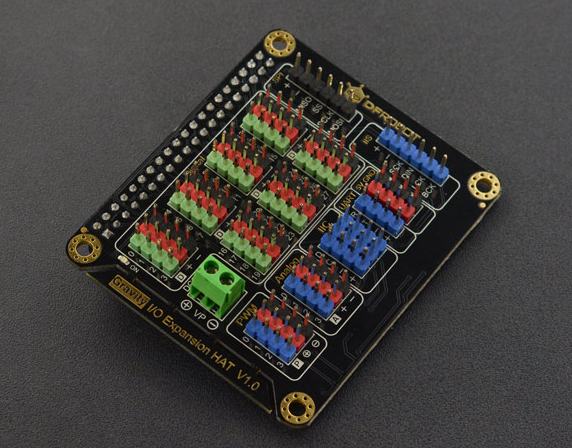
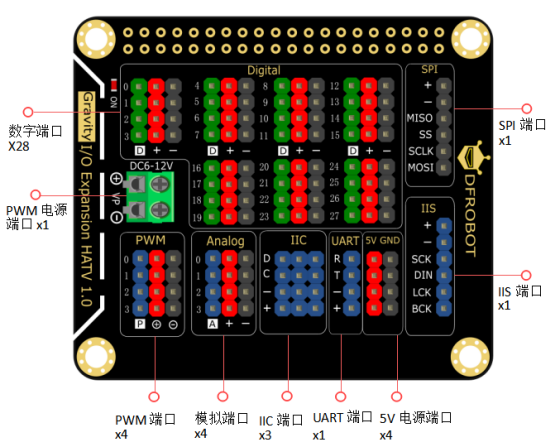
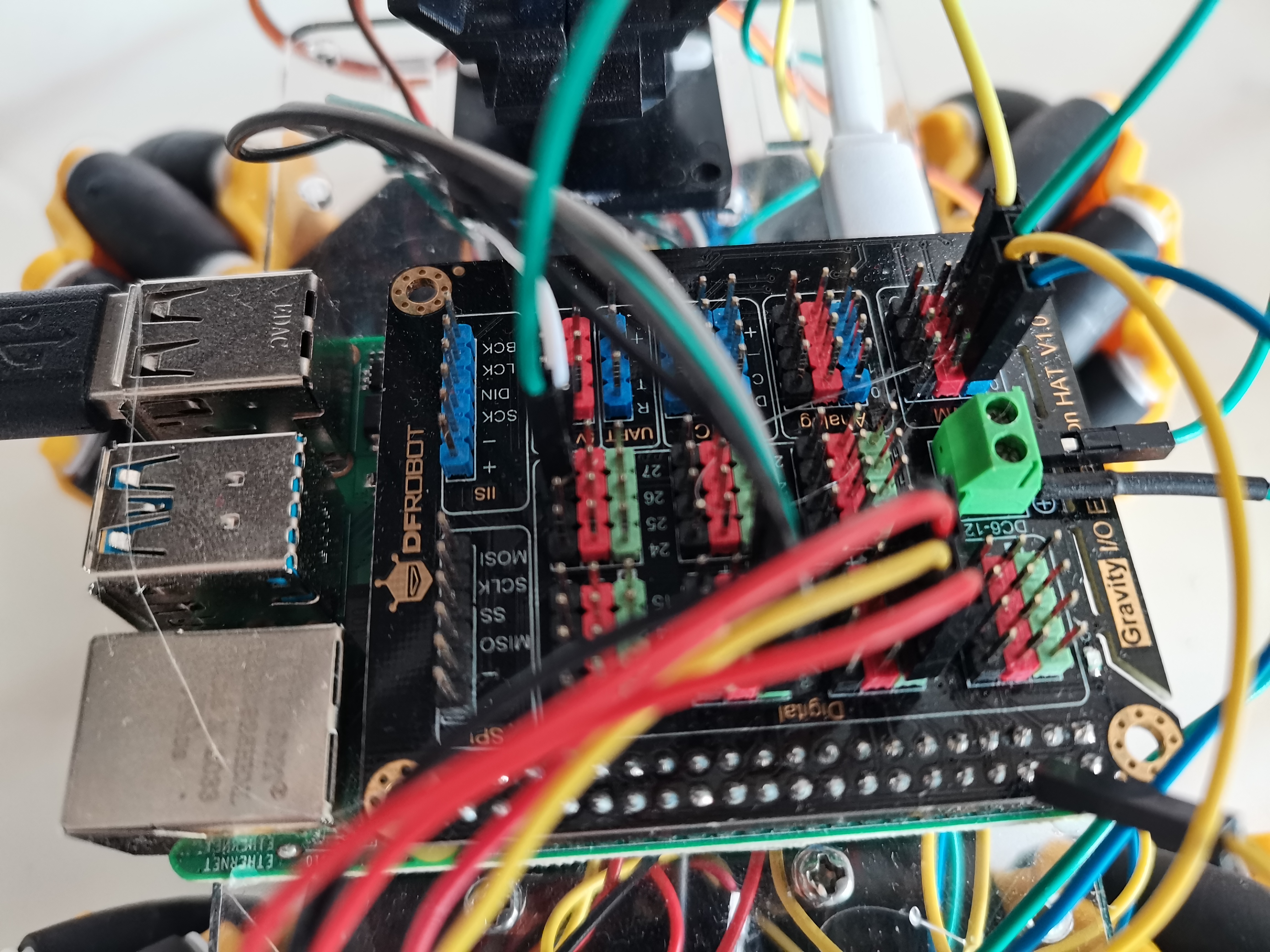
PWM端口:IO扩展板提供了四组PWM端口,连接到STM32的PWM端,树莓派通过I2C通讯将数据发送给STM32实现控制。BOARD.py
-
- # -*- coding:utf-8 -*-
-
- '''!
- @file DFRobot_RaspberryPi_Expansion_Board.py
- @brief This RaspberryPi expansion board can communicate with RaspberryPi via I2C. It has 10 GPIOs, 1 SPI, 4 I2Cs and 1 uart.
- @copyright Copyright (c) 2010 DFRobot Co.Ltd (http://www.dfrobot.com)
- @license The MIT License (MIT)
- @author Frank(jiehan.guo@dfrobot.com)
- @version V1.0
- @date 2019-3-28
- @url https://github.com/DFRobot/DFRobot_RaspberryPi_Expansion_Board
- '''
-
- import time
-
- _PWM_CHAN_COUNT = 4
- _ADC_CHAN_COUNT = 4
-
- class DFRobot_Expansion_Board:
-
- _REG_SLAVE_ADDR = 0x00
- _REG_PID = 0x01
- _REG_VID = 0x02
- _REG_PWM_CONTROL = 0x03
- _REG_PWM_FREQ = 0x04
- _REG_PWM_DUTY1 = 0x06
- _REG_PWM_DUTY2 = 0x08
- _REG_PWM_DUTY3 = 0x0a
- _REG_PWM_DUTY4 = 0x0c
- _REG_ADC_CTRL = 0x0e
- _REG_ADC_VAL1 = 0x0f
- _REG_ADC_VAL2 = 0x11
- _REG_ADC_VAL3 = 0x13
- _REG_ADC_VAL4 = 0x15
-
- _REG_DEF_PID = 0xdf
- _REG_DEF_VID = 0x10
-
- ''' Enum board Analog channels '''
- A0 = 0x00
- A1 = 0x01
- A2 = 0x02
- A3 = 0x03
-
- ''' Board status '''
- STA_OK = 0x00
- STA_ERR = 0x01
- STA_ERR_DEVICE_NOT_DETECTED = 0x02
- STA_ERR_SOFT_VERSION = 0x03
- STA_ERR_PARAMETER = 0x04
-
- ''' last operate status, users can use this variable to determine the result of a function call. '''
- last_operate_status = STA_OK
-
- ''' Global variables '''
- ALL = 0xffffffff
-
- def _write_bytes(self, reg, buf):
- pass
-
- def _read_bytes(self, reg, len):
- pass
-
- def __init__(self, addr):
- self._addr = addr
- self._is_pwm_enable = False
-
- def begin(self):
- '''
- @brief Board begin
- @return Board status
- '''
- pid = self._read_bytes(self._REG_PID, 1)
- vid = self._read_bytes(self._REG_VID, 1)
- if self.last_operate_status == self.STA_OK:
- if pid[0] != self._REG_DEF_PID:
- self.last_operate_status = self.STA_ERR_DEVICE_NOT_DETECTED
- elif vid[0] != self._REG_DEF_VID:
- self.last_operate_status = self.STA_ERR_SOFT_VERSION
- else:
- self.set_pwm_disable()
- self.set_pwm_duty(self.ALL, 0)
- self.set_adc_disable()
- return self.last_operate_status
-
- def set_addr(self, addr):
- '''
- @brief Set board controler address, reboot module to make it effective
- @param address: int Address to set, range in 1 to 127
- '''
- if addr < 1 or addr > 127:
- self.last_operate_status = self.STA_ERR_PARAMETER
- return
- self._write_bytes(self._REG_SLAVE_ADDR, [addr])
-
- def _parse_id(self, limit, id):
- ld = []
- if isinstance(id, list) == False:
- id = id + 1
- ld.append(id)
- else:
- ld = [i + 1 for i in id]
- if ld == self.ALL:
- return range(1, limit + 1)
- for i in ld:
- if i < 1 or i > limit:
- self.last_operate_status = self.STA_ERR_PARAMETER
- return []
- return ld
-
- def set_pwm_enable(self):
- '''
- @brief Set pwm enable, pwm channel need external power
- '''
- self._write_bytes(self._REG_PWM_CONTROL, [0x01])
- if self.last_operate_status == self.STA_OK:
- self._is_pwm_enable = True
- time.sleep(0.01)
-
- def set_pwm_disable(self):
- '''
- @brief Set pwm disable
- '''
- self._write_bytes(self._REG_PWM_CONTROL, [0x00])
- if self.last_operate_status == self.STA_OK:
- self._is_pwm_enable = False
- time.sleep(0.01)
-
- def set_pwm_frequency(self, freq):
- '''
- @brief Set pwm frequency
- @param freq: int Frequency to set, in range 1 - 1000
- '''
- if freq < 1 or freq > 1000:
- self.last_operate_status = self.STA_ERR_PARAMETER
- return
- is_pwm_enable = self._is_pwm_enable
- self.set_pwm_disable()
- self._write_bytes(self._REG_PWM_FREQ, [freq >> 8, freq & 0xff])
- time.sleep(0.01)
- if is_pwm_enable:
- self.set_pwm_enable()
-
- def set_pwm_duty(self, chan, duty):
- '''
- @brief Set selected channel duty
- @param chan: list One or more channels to set, items in range 1 to 4, or chan = self.ALL
- @param duty: float Duty to set, in range 0.0 to 100.0
- '''
- if duty < 0 or duty > 100:
- self.last_operate_status = self.STA_ERR_PARAMETER
- return
- for i in self._parse_id(_PWM_CHAN_COUNT, chan):
- self._write_bytes(self._REG_PWM_DUTY1 + (i - 1) * 2, [int(duty), int((duty * 10) % 10)])
-
- def set_adc_enable(self):
- '''
- @brief Set adc enable
- '''
- self._write_bytes(self._REG_ADC_CTRL, [0x01])
-
- def set_adc_disable(self):
- '''
- @brief Set adc disable
- '''
- self._write_bytes(self._REG_ADC_CTRL, [0x00])
-
- def get_adc_value(self, chan):
- '''
- @brief Get adc value
- @param chan: int Channel to get, in range 1 to 4, or self.ALL
- @return :list List of value
- '''
- for i in self._parse_id(_ADC_CHAN_COUNT, chan):
- rslt = self._read_bytes(self._REG_ADC_VAL1 + (i - 1) * 2, 2)
- return ((rslt[0] << 8) | rslt[1])
-
- def detecte(self):
- '''
- @brief If you forget address you had set, use this to detecte them, must have class instance
- @return Board list conformed
- '''
- l = []
- back = self._addr
- for i in range(1, 127):
- self._addr = i
- if self.begin() == self.STA_OK:
- l.append(i)
- for i in range(0, len(l)):
- l[i] = hex(l[i])
- self._addr = back
- self.last_operate_status = self.STA_OK
- return l
-
- class DFRobot_Epansion_Board_Digital_RGB_LED():
-
- def __init__(self, board):
- '''
- @param board: DFRobot_Expansion_Board Board instance to operate digital rgb led, test LED: https://www.dfrobot.com/product-1829.html
- Warning: LED must connect to pwm channel, otherwise may destory Pi IO
- '''
- self._board = board
- self._chan_r = 0
- self._chan_g = 0
- self._chan_b = 0
-
- def begin(self, chan_r, chan_g, chan_b):
- '''
- @brief Set digital rgb led color channel, these parameters not repeat
- @param chan_r: int Set color red channel id, in range 1 to 4
- @param chan_g: int Set color green channel id, in range 1 to 4
- @param chan_b: int Set color blue channel id, in range 1 to 4
- '''
- if chan_r == chan_g or chan_r == chan_b or chan_g == chan_b:
- return
- if chan_r < _PWM_CHAN_COUNT and chan_g < _PWM_CHAN_COUNT and chan_b < _PWM_CHAN_COUNT:
- self._chan_r = chan_r
- self._chan_g = chan_g
- self._chan_b = chan_b
- self._board.set_pwm_enable()
- self._board.set_pwm_frequency(1000)
- self._board.set_pwm_duty(self._board.ALL, 100)
-
- def color888(self, r, g, b):
- '''
- @brief Set LED to true-color
- @param r: int Color components red
- @param g: int Color components green
- @param b: int Color components blue
- '''
- self._board.set_pwm_duty([self._chan_r], 100 - (r & 0xff) * 100 // 255)
- self._board.set_pwm_duty([self._chan_g], 100 - (g & 0xff) * 100 // 255)
- self._board.set_pwm_duty([self._chan_b], 100 - (b & 0xff) * 100 // 255)
-
- def color24(self, color):
- '''
- @brief Set LED to 24-bits color
- @param color: int 24-bits color
- '''
- color &= 0xffffff
- self.color888(color >> 16, (color >> 8) & 0xff, color & 0xff)
-
- def color565(self, color):
- '''
- @brief Set LED to 16-bits color
- @param color: int 16-bits color
- '''
- color &= 0xffff
- self.color888((color & 0xf800) >> 8, (color & 0x7e0) >> 3, (color & 0x1f) << 3)
-
- class DFRobot_Expansion_Board_Servo():
-
- def __init__(self, board):
- '''
- @param board: DFRobot_Expansion_Board Board instance to operate servo, test servo: https://www.dfrobot.com/product-255.html
- Warning: servo must connect to pwm channel, otherwise may destory Pi IO
- '''
- self._board = board
-
- def begin(self):
- '''
- @brief Board servo begin
- '''
- self._board.set_pwm_enable()
- self._board.set_pwm_frequency(50)
- self._board.set_pwm_duty(self._board.ALL, 0)
-
- def move(self, id, angle):
- '''
- @brief Servos move
- @param id: list One or more servos to set, items in range 1 to 4, or chan = self.ALL
- @param angle: int Angle to move, in range 0 to 180
- '''
- if 0 <= angle <= 180:
- self._board.set_pwm_duty(id, (0.5 + (float(angle) / 90.0)) / 20 * 100)
-
- import smbus
-
- class DFRobot_Expansion_Board_IIC(DFRobot_Expansion_Board):
-
- def __init__(self, bus_id, addr):
- '''
- @param bus_id: int Which bus to operate
- @oaram addr: int Board controler address
- '''
- self._bus = smbus.SMBus(bus_id)
- DFRobot_Expansion_Board.__init__(self, addr)
-
- def _write_bytes(self, reg, buf):
- self.last_operate_status = self.STA_ERR_DEVICE_NOT_DETECTED
- try:
- self._bus.write_i2c_block_data(self._addr, reg, buf)
- self.last_operate_status = self.STA_OK
- except:
- pass
-
- def _read_bytes(self, reg, len):
- self.last_operate_status = self.STA_ERR_DEVICE_NOT_DETECTED
- try:
- rslt = self._bus.read_i2c_block_data(self._addr, reg, len)
- self.last_operate_status = self.STA_OK
- return rslt
- except:
- return [0] * len
-
PWM测试程序
-
-
- import time
- import RPi.GPIO as GPIO
-
- GPIO.setmode(GPIO.BCM)
- GPIO.setup(4,GPIO.OUT)
- GPIO.setup(5,GPIO.OUT)
- GPIO.setup(6,GPIO.OUT)
- GPIO.setup(7,GPIO.OUT)
- GPIO.setup(8,GPIO.OUT)
- GPIO.setup(9,GPIO.OUT)
- GPIO.setup(10,GPIO.OUT)
- GPIO.setup(11,GPIO.OUT)
-
-
- from BOARD import DFRobot_Expansion_Board_IIC as Board
-
- board = Board(1, 0x10) # Select i2c bus 1, set address to 0x10
-
- def board_detect():
- l = board.detecte()
- print("Board list conform:")
- print(l)
-
- ''' print last operate status, users can use this variable to determine the result of a function call. '''
- def print_board_status():
- if board.last_operate_status == board.STA_OK:
- print("board status: everything ok")
- elif board.last_operate_status == board.STA_ERR:
- print("board status: unexpected error")
- elif board.last_operate_status == board.STA_ERR_DEVICE_NOT_DETECTED:
- print("board status: device not detected")
- elif board.last_operate_status == board.STA_ERR_PARAMETER:
- print("board status: parameter error")
- elif board.last_operate_status == board.STA_ERR_SOFT_VERSION:
- print("board status: unsupport board framware version")
-
- if __name__ == "__main__":
-
- board_detect() # If you forget address you had set, use this to detected them, must have class instance
-
- # Set board controler address, use it carefully, reboot module to make it effective
-
-
- while board.begin() != board.STA_OK: # Board begin and check board status
- print_board_status()
- print("board begin faild")
- time.sleep(2)
- print("board begin success")
-
- board.set_pwm_enable() # Pwm channel need external power
- # board.set_pwm_disable()
- board.set_pwm_frequency(1000) # Set frequency to 1000HZ, Attention: PWM voltage depends on independent power supply
-
-
-
- print("set part pwm channels duty to 60%")
- board.set_pwm_duty(3, 60) # Set pwm0 channels duty
- #board.set_pwm_duty(1, 70) # Set pwm1 channels duty
- #board.set_pwm_duty(2, 80) # Set pwm2 channels duty
- #board.set_pwm_duty(3, 90) # Set pwm3 channels duty
-
- GPIO.output(8,GPIO.HIGH)#left 1()
- GPIO.output(9,GPIO.LOW)
- GPIO.output(6,GPIO.HIGH)#left 2(1)
- GPIO.output(7,GPIO.LOW)
-
- GPIO.output(10,GPIO.HIGH)#right 1(2)
- GPIO.output(11,GPIO.LOW)
- GPIO.output(4,GPIO.HIGH)#right 2(0)
- GPIO.output(5,GPIO.LOW)
- time.sleep(1)
- GPIO.cleanup()
【控制麦克纳姆轮】
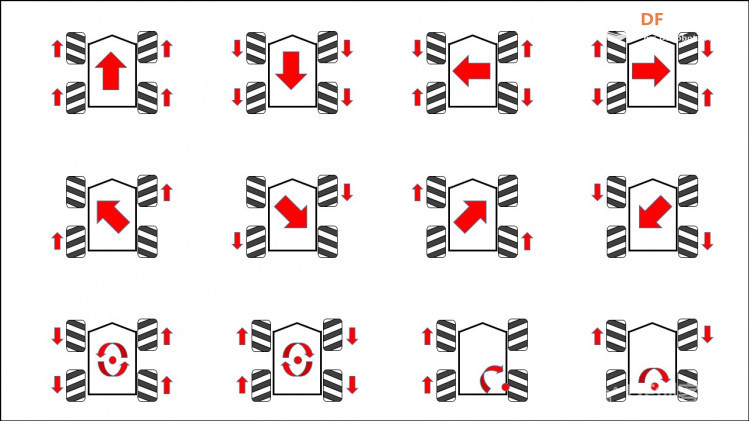
麦克纳姆轮与普通轮子的区别在于麦克纳姆轮旋转时,由于存在斜向的从动轮,会同时产生一个斜向的力,当我们控制轮子旋转的速度与方向时,将斜向的力增强或抵消,从而实现小车的全向移动。可以完成横移、斜方向移动等普通小车无法完成的高难度动作,轮子的转动方向与小车的运动方向关系如下图:
引脚控制程序封装成类文件mygpio.py
-
- import RPi.GPIO as GPIO
- class mygpio():
- GPIO.setmode(GPIO.BCM)
- GPIO.setup(4,GPIO.OUT)
- GPIO.setup(5,GPIO.OUT)
- GPIO.setup(6,GPIO.OUT)
- GPIO.setup(7,GPIO.OUT)
- GPIO.setup(8,GPIO.OUT)
- GPIO.setup(9,GPIO.OUT)
- GPIO.setup(10,GPIO.OUT)
- GPIO.setup(11,GPIO.OUT)
-
-
- def forward(self):
-
- GPIO.output(8,GPIO.HIGH)#left 1
- GPIO.output(9,GPIO.LOW)
- GPIO.output(6,GPIO.HIGH)#left 2
- GPIO.output(7,GPIO.LOW)
-
- GPIO.output(10,GPIO.HIGH)#right 1
- GPIO.output(11,GPIO.LOW)
- GPIO.output(4,GPIO.HIGH)#right 2
- GPIO.output(5,GPIO.LOW)
- def back(self):
-
- GPIO.output(8,GPIO.LOW)#left 1
- GPIO.output(9,GPIO.HIGH)
- GPIO.output(6,GPIO.LOW)#left 2
- GPIO.output(7,GPIO.HIGH)
-
- GPIO.output(10,GPIO.LOW)#right 1
- GPIO.output(11,GPIO.HIGH)
- GPIO.output(4,GPIO.LOW)#right 2
- GPIO.output(5,GPIO.HIGH)
-
- def left(self):
-
- GPIO.output(8,GPIO.LOW)#left 1
- GPIO.output(9,GPIO.HIGH)
- GPIO.output(6,GPIO.HIGH)#left 2
- GPIO.output(7,GPIO.LOW)
-
- GPIO.output(10,GPIO.HIGH)#right 1
- GPIO.output(11,GPIO.LOW)
- GPIO.output(4,GPIO.LOW)#right 2
- GPIO.output(5,GPIO.HIGH)
- def right(self):
-
- GPIO.output(8,GPIO.HIGH)#left 1
- GPIO.output(9,GPIO.LOW)
- GPIO.output(6,GPIO.LOW)#left 2
- GPIO.output(7,GPIO.HIGH)
-
- GPIO.output(10,GPIO.LOW)#right 1
- GPIO.output(11,GPIO.HIGH)
- GPIO.output(4,GPIO.HIGH)#right 2
- GPIO.output(5,GPIO.LOW)
- def l_rotate(self):
-
- GPIO.output(8,GPIO.LOW)#left 1
- GPIO.output(9,GPIO.HIGH)
- GPIO.output(6,GPIO.LOW)#left 2
- GPIO.output(7,GPIO.HIGH)
-
- GPIO.output(10,GPIO.HIGH)#right 1
- GPIO.output(11,GPIO.LOW)
- GPIO.output(4,GPIO.HIGH)#right 2
- GPIO.output(5,GPIO.LOW)
- def r_rotate(self):
-
- GPIO.output(8,GPIO.HIGH)#left 1
- GPIO.output(9,GPIO.LOW)
- GPIO.output(6,GPIO.HIGH)#left 2
- GPIO.output(7,GPIO.LOW)
-
- GPIO.output(10,GPIO.LOW)#right 1
- GPIO.output(11,GPIO.HIGH)
- GPIO.output(4,GPIO.LOW)#right 2
- GPIO.output(5,GPIO.HIGH)
-
- def stop(self):
- GPIO.output(4,GPIO.LOW)
- GPIO.output(5,GPIO.LOW)
- GPIO.output(6,GPIO.LOW)
- GPIO.output(7,GPIO.LOW)
- GPIO.output(8,GPIO.LOW)
- GPIO.output(9,GPIO.LOW)
- GPIO.output(10,GPIO.LOW)
- GPIO.output(11,GPIO.LOW)
-
-
-
- #GPIO.cleanup()
-
-
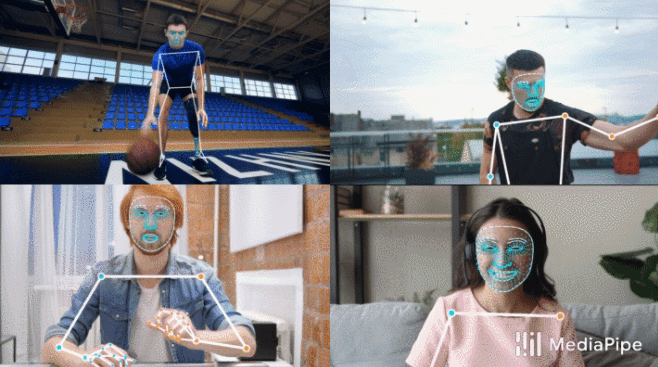
【Mediapipe】MediaPipe 是一款由 Google Research 开发并开源的多媒体机器学习模型应用框架。在谷歌,一系列重要产品,如 、Google Lens、ARCore、Google Home 以及 ,都已深度整合了 MediaPipe。
安装mediapipe库,在终端中使用:pip3 install mediapipe-rpi4
人体姿态Mediapipe Pose,测试程序:
-
- import cv2
- import time
- import mediapipe as mp
- mp_drawing = mp.solutions.drawing_utils
- mp_drawing_styles = mp.solutions.drawing_styles
- mp_pose = mp.solutions.pose
- pTime = 0
- cTime = 0
-
- # For webcam input:
- cap = cv2.VideoCapture(0)
-
- j=0
- with mp_pose.Pose(min_detection_confidence=0.5,min_tracking_confidence=0.5) as pose:
- while cap.isOpened():
- success, image = cap.read()
- if not success:
- print("Ignoring empty camera frame.")
- # If loading a video, use 'break' instead of 'continue'.
- continue
- j=j+1
- if j<3:#丢帧
- continue
- else:
- j=0
-
- h,w,c=image.shape
- image.flags.writeable = False
- image = cv2.cvtColor(image, cv2.COLOR_BGR2RGB)
- results = pose.process(image)
-
- # Draw the pose annotation on the image.
- if results.pose_landmarks:
- list_x=[]
- list_y=[]
- image.flags.writeable = False
- image = cv2.cvtColor(image, cv2.COLOR_RGB2BGR)
- #print(results.pose_landmarks.landmark)
- for i in results.pose_landmarks.landmark:
- list_x.append(i.x)
- list_y.append(i.y)
- min_x=int(min(list_x)*w)
- min_y=int(min(list_y)*h)
- max_x=int(max(list_x)*w)
- max_y=int(max(list_y)*h)
- #cv2.circle(image,(min_x,min_y),10,(0,255,255),-1)
- #cv2.circle(image,(max_x,max_y),5,(0,0,255),-1)
- #print(min_x," ",min_y," ",max_x," ",max_y," ",w," ",h)
- #cv2.rectangle(img,(min_x*2,min_y*2),(max_x*2,max_y*2),(255,0,0),10)
- cv2.rectangle(image,(min_x,min_y),(max_x,max_y),(255,0,0),10)
- #mp_drawing.draw_landmarks(image,results.pose_landmarks,mp_pose.POSE_CONNECTIONS,landmark_drawing_spec=mp_drawing_styles.get_default_pose_landmarks_style())
-
-
- cTime = time.time()
- fps = 1 / (cTime - pTime)
- pTime = cTime
- cv2.putText(image, str(int(fps)), (10, 70), cv2.FONT_HERSHEY_PLAIN, 3,(255, 0, 255), 3)
-
- cv2.imshow('MediaPipe Pose', cv2.flip(image, 1))
- if cv2.waitKey(1) & 0xFF == 27:
- break
- cap.release()
-

因为帧频有些低,只有5帧/秒左右,所以进行了丢帧处理。
【完整程序】
-
- import sys
- import os
-
- import cv2
- import time
- import mediapipe as mp
- import RPi.GPIO as GPIO
- from mygpio import mygpio
- sys.path.append(os.path.dirname(os.path.dirname(os.path.realpath(__file__))))
-
- from BOARD import DFRobot_Expansion_Board_IIC as Board
- board = Board(1, 0x10) # Select i2c bus 1, set address to 0x10
- def board_detect():
- l = board.detecte()
- board_detect()
- while board.begin() != board.STA_OK: # Board begin and check board status
-
- print("board begin faild")
- time.sleep(2)
- print("board begin success")
- board.set_pwm_enable() # Pwm channel need external power
- # board.set_pwm_disable()
- board.set_pwm_frequency(1000)
- board.set_pwm_duty(0, 60)
- board.set_pwm_duty(1, 60)
- board.set_pwm_duty(2, 60)
- board.set_pwm_duty(3, 60)
-
- g=mygpio()
-
- mp_drawing = mp.solutions.drawing_utils
- mp_drawing_styles = mp.solutions.drawing_styles
- mp_pose = mp.solutions.pose
- pTime = 0
- cTime = 0
-
- # For webcam input:
- cap = cv2.VideoCapture(0)
-
- j=0
- with mp_pose.Pose(min_detection_confidence=0.5,min_tracking_confidence=0.5) as pose:
- while cap.isOpened():
- success, image = cap.read()
- if not success:
- print("Ignoring empty camera frame.")
- # If loading a video, use 'break' instead of 'continue'.
- continue
- j=j+1
- if j<3:
- continue
- else:
- j=0
-
- h,w,c=image.shape
- image.flags.writeable = False
- image = cv2.cvtColor(image, cv2.COLOR_BGR2RGB)
- results = pose.process(image)
-
- # Draw the pose annotation on the image.
- if results.pose_landmarks:
- list_x=[]
- list_y=[]
- image.flags.writeable = False
- image = cv2.cvtColor(image, cv2.COLOR_RGB2BGR)
- #print(results.pose_landmarks.landmark)
- for i in results.pose_landmarks.landmark:
- list_x.append(i.x)
- list_y.append(i.y)
- min_x=int(min(list_x)*w)
- min_y=int(min(list_y)*h)
- max_x=int(max(list_x)*w)
- max_y=int(max(list_y)*h)
- #cv2.circle(image,(min_x,min_y),10,(0,255,255),-1)
- #cv2.circle(image,(max_x,max_y),5,(0,0,255),-1)
- #print(min_x," ",min_y," ",max_x," ",max_y," ",w," ",h)
- #cv2.rectangle(img,(min_x*2,min_y*2),(max_x*2,max_y*2),(255,0,0),10)
- cv2.rectangle(image,(min_x,min_y),(max_x,max_y),(255,0,0),10)
- #mp_drawing.draw_landmarks(image,results.pose_landmarks,mp_pose.POSE_CONNECTIONS,landmark_drawing_spec=mp_drawing_styles.get_default_pose_landmarks_style())
- mid=(min_x+max_x)/2
- dis_x=mid-w/2
- dis_w=max_x-min_x
- print(dis_x," ",dis_w)
-
- if dis_x>90:
- print("right")
- board.set_pwm_duty(0, 70)
- board.set_pwm_duty(1, 70)
- board.set_pwm_duty(2, 70)
- board.set_pwm_duty(3, 70)
- g.right()
- elif dis_x<-90:
- print("left")
- board.set_pwm_duty(0, 70)
- board.set_pwm_duty(1, 70)
- board.set_pwm_duty(2, 70)
- board.set_pwm_duty(3, 70)
- g.left()
- elif dis_w>350:
- print("back")
- board.set_pwm_duty(0, 60)
- board.set_pwm_duty(1, 60)
- board.set_pwm_duty(2, 60)
- board.set_pwm_duty(3, 60)
- g.back()
- elif dis_w<200:
- print("forward")
- board.set_pwm_duty(0, 63)
- board.set_pwm_duty(1, 60)
- board.set_pwm_duty(2, 63)
- board.set_pwm_duty(3, 60)
- g.forward()
- else:
- print("stop1")
- g.stop()
- else:
- print("stop2")
- g.stop()
- cTime = time.time()
- fps = 1 / (cTime - pTime)
- pTime = cTime
- cv2.putText(image, str(int(fps)), (10, 70), cv2.FONT_HERSHEY_PLAIN, 3,(255, 0, 255), 3)
-
- cv2.imshow('MediaPipe Pose', cv2.flip(image, 1))
- if cv2.waitKey(1) & 0xFF == 27:
- break
- cap.release()
- GPIO.cleanup()
-
-
【演示视频】


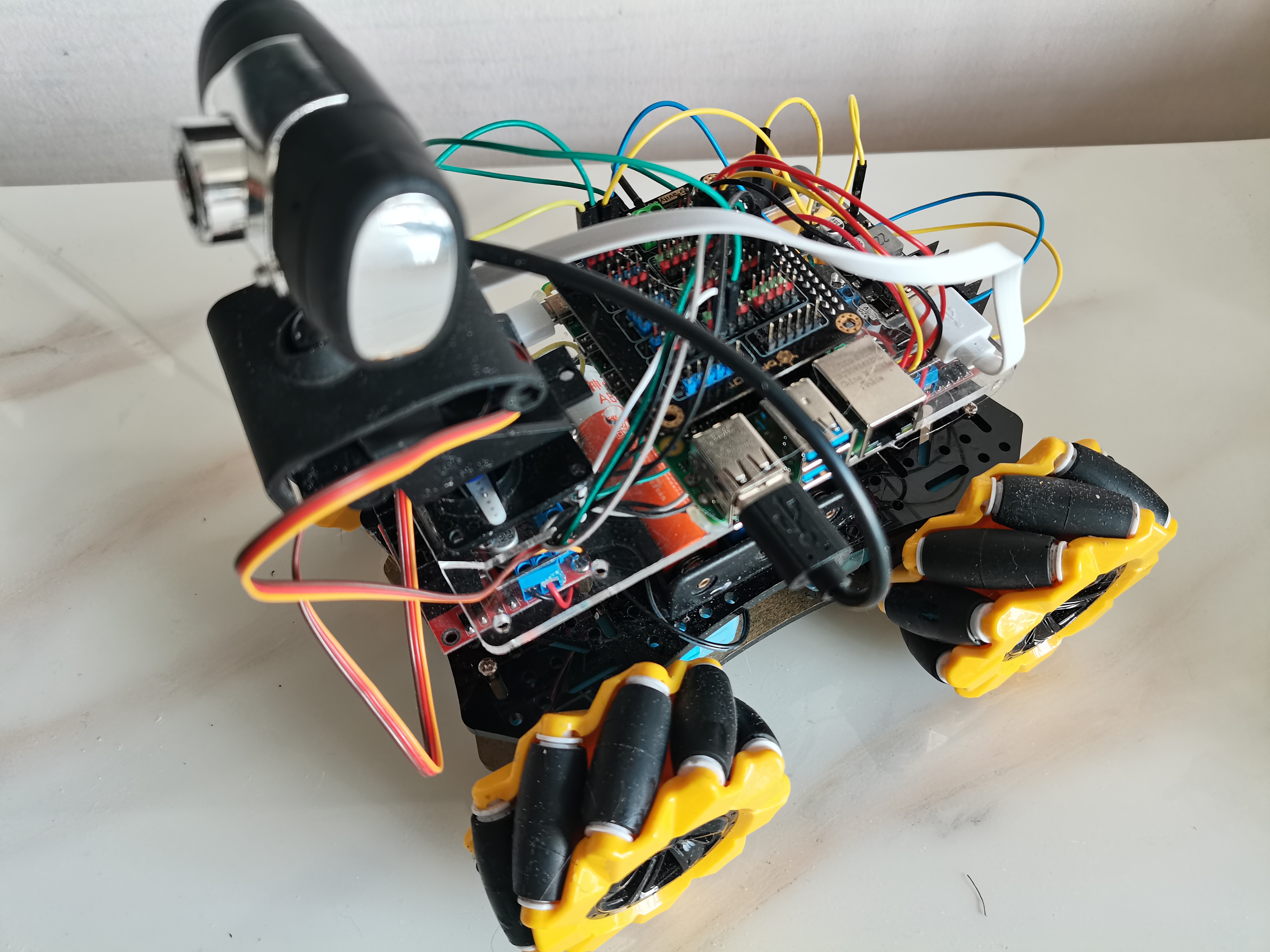
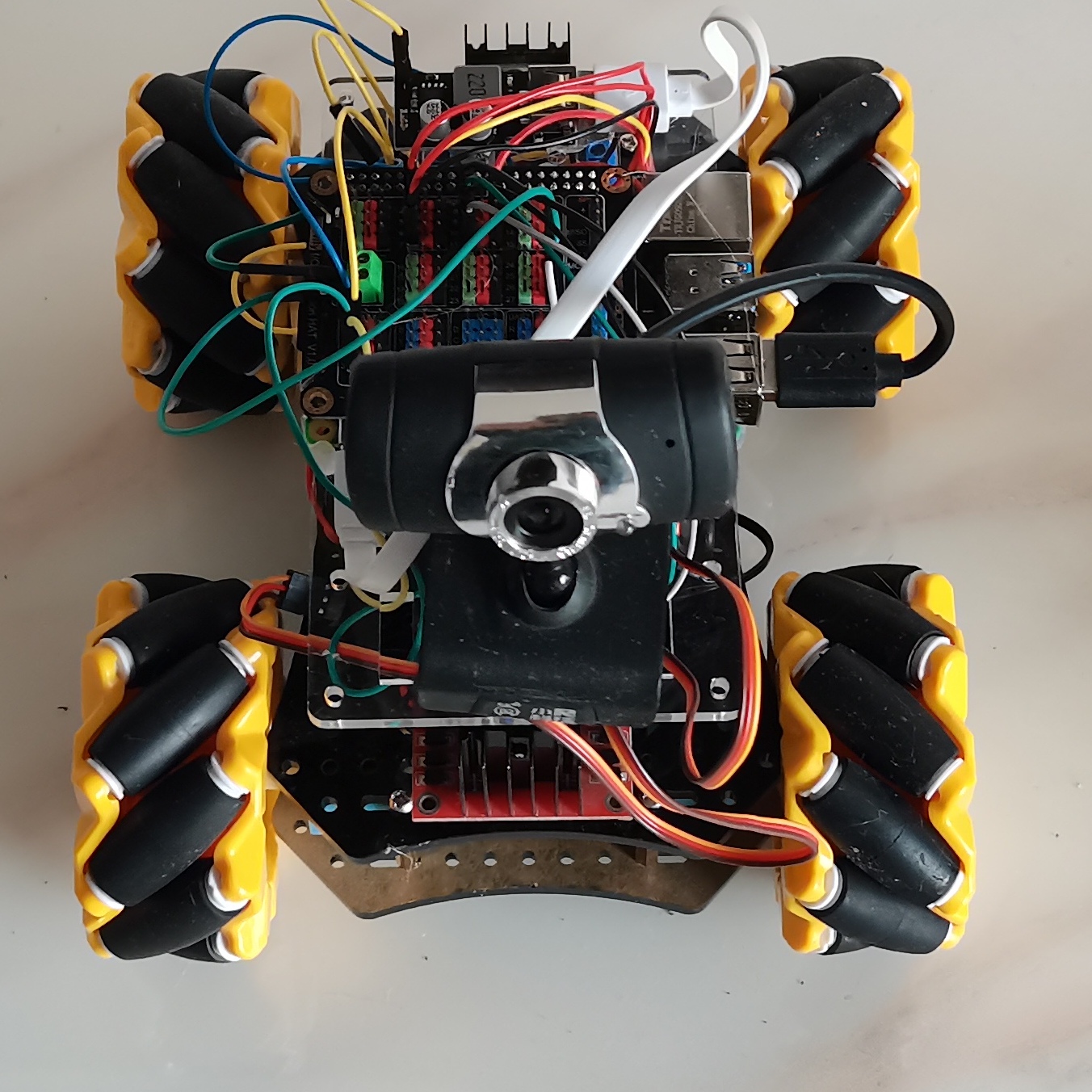
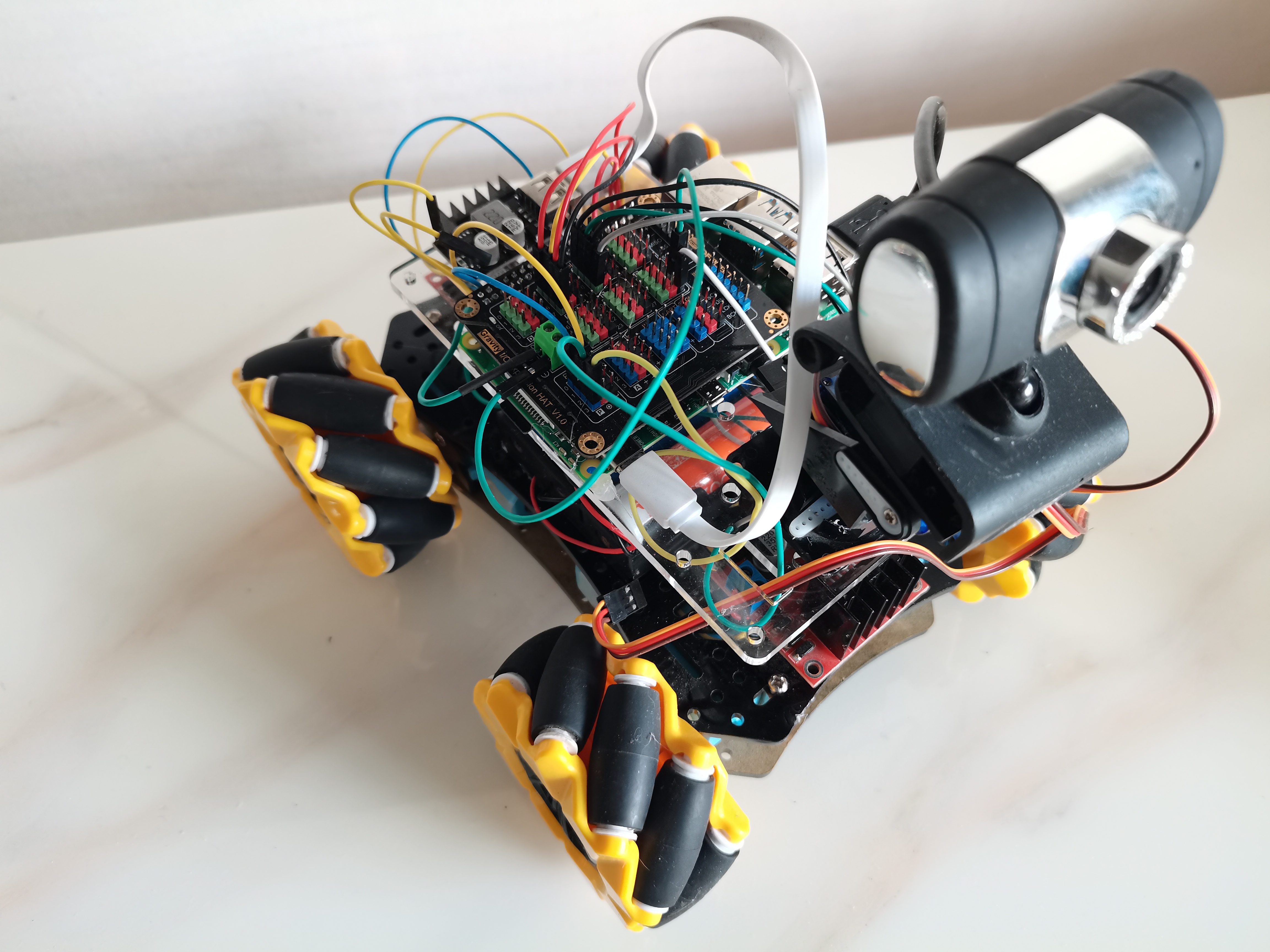



https://mp.weixin.qq.com/s/kF2djn5gNV35k_brhKOMfQ